Thursday, 31 January 2013

Hiking with Kids: The 3 D's of Picking a Kid-Friendly Trail

The choke stone in McGillivray Canyon
I've been looking for more canyon trails since I led a kids hike up Stoneworks Canyon early last summer. The kids loved the canyon's short section of narrow, tight curves and overhanging walls that it had taken water thousands of years to carve out of the limestone. Beyond the curves, the canyon opened up a bit to a boulder strewn creek bed that they had a blast scrambling over.

Recently, I found an even better canyon: McGillivray Canyon. It had about a kilometer of tighter, curvier walls with chains and a ladder bolted into the rock to help climb up and over obstacles and steps. Near the end a giant choke stone was suspended above the canyon floor like something out of an Indiana Jones movie. At 4 km round trip, it was a fun little hike for adults, but it would be an extreme adventure for kids.

See how the actual kids hike to McGillivray Canyon went

Click here for more kids hikes in Banff, Kananaskis, Kootenay and other areas of the Canadian Rockies.

One of the cables over a frozen pond
The problem? I hiked McGillivray Canyon in late January, when there was enough snow and ice to make it a little too extreme for kids. Would it be kid friendly in the summer or was I letting my enthusiasm cloud my judgement? What I saw as Indiana Jones and the McGillivray Choke Stone could easily turn into a kid-size remake of 127 Hours.

One question I get asked a lot is how I pick my kids hikes. Even experienced hikers ask. Especially experienced hikers. They want to take their kids beyond the usual interpretive trails and standard easy hikes, but they're worried about taking them on a trail too that's too hard or too far. My answer is simple: the 3 Ds of picking a kid friendly trail. Discovery, due diligence, decision.
The Khumbu Icefalls for kids

1. Discovery

I call this the "Aha!" moment. It's when I realize that a trail would be great for kids. In the case of McGillivray Canyon, it was the moment we entered the canyon and I saw the high narrow walls. Then I saw the chains and had a double Aha. In other cases, it's coming across a boulder field for the kids to climb on (see my post on hiking Little Lougheed with kids) or fossils for them to hunt (see my post on hiking Burns Ridge with kids).
Chains to help climb a short step


2. Due Diligence

When I get back home, I start the due diligence process to make sure I haven't missed anything that would rule the trail out or that I should be aware of before taking kids on it. This includes assessing hazards on the route. If possible I talk to other people who have hiked the trail. Other sources of beta (information) include websites with trip reports, Google Images for photos, and guide books.

In the case of McGillivray Canyon, one of the hazards were the many frozen pools in the canyon bottom. They were small and had logs across them, but in January they were frozen and we could walk right over them. There were also cables strung over the logs to hold onto, but some might be too high for kids to reach. Google Images confirmed that the logs did indeed cross standing pools of water in summer, but not how deep they were. Could the kids cross the pools on the logs without excessive risk of going for a dip? If they did go for a dip, what would be the consequences? Could a parent walk through the ponds to help kids out if necessary?

Then there was the source of the water in the pools. How much water flowed in the canyon once the ice melted?
The highest chained section. Tricky with ice, kids should be able to climb it dry.

3. Decision

The ice on a couple frozen ponds had broken, revealing gravel two or three inches below. Talking with people in the Calgary Outdoor Recreation Association (CORA) who'd done the canyon in summer and fall, it sounded like most of the pools were ankle deep. Deep enough to drown in, but not so deep a parent couldn't quickly scoop a kid up. Trip reports on the web suggested that the water was no more than a trickle after the spring run off was finished.
The decision: I'll schedule a McGillivray Canyon kids hike this summer, probably in late July or August--well after spring run off. Stay tuned for the trip report.

Post Script: When I post this kids hike on CORA's website, I'll include a description of the chains, the logs and the possibility of the trickle turning into a torrent if an expected storm hits. Letting other parents know about the hazards is not only a courtesy, it's a responsibility. I appreciate the trust parents put in my judgement when they come on one of my kids hikes, but I can only decide what risks are acceptable to expose my own kids to. It's up to other parents to make the same informed decisions for their own kids.
The boulders at the end.

Tuesday, 29 January 2013

Kids Snowshoeing Gear: It All Starts with the Right Winter Boots

Stand up! You're going to get snow in your boots.
The only thing worse than cold wet feet are cold frozen feet. A successful kids snowshoe trip starts with the kids wearing the right foot wear. While I've suggested in a past post on kids hiking gear that kids don't necessarily need hiking boots, equipping them with the right boots on a snowshoe trip can make the difference between a fun winter outing and a painful, cry-filled experience or worse—a trip to emergency for frostbitten toes.

If preventing kids from crying isn't enough, think of boots like sunscreen. Just like a bad sun burn early in life increases your chances of skin cancer later on, getting frostbite once increases the likelihood of getting frostbite in the future. Long-term effects of even a single case of frostbite include heightened sensitivity to the cold, numbness, stiffness, chronic pain and amputation. It doesn't get any longer term than having your toes cut off when you're a kid.

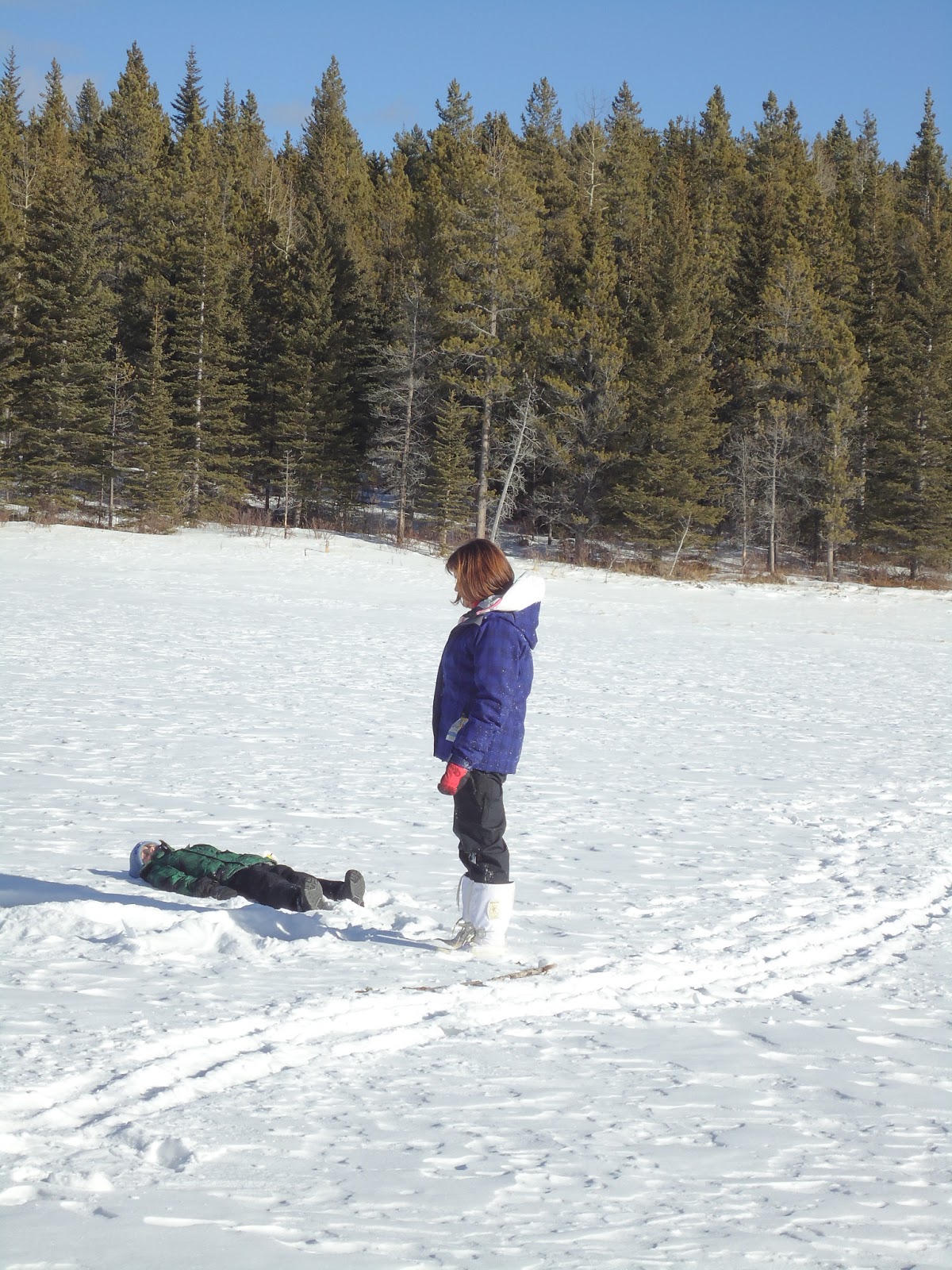
Didn't you hear what I told your brother about lying in the snow?
Here are some tips on how to choose a boot that's appropriate for snowshoeing, as well as shoveling snow, and playing king of the snow pile at school:

Temperature rating—If the boots don't have a temperature rating, don't buy them. No rating can be a sign that the boots aren't intended for extended forays into the cold. Look for a boot rated to -20 C/-5 F or lower. It's best to err on the side of too warm than too cold. Everyone's different, and what will keep some kids' toes toasty at -20 C will let others' toes freeze at -10 C.

I thought I told you to get up!
No hiking boots—On warmer days, an adult can get moving fast enough to keep his/her feet warm enough in hiking boots. Kids on the other hand generally move slower and stop more. This means their bodies aren't producing as much heat, and their blood isn't circulating that heat to their hands and feet as efficiently. (The stopping can also keep parents from moving enough to stay warm, so you might want to forgo the winter hiking boots, too.) Hiking boots also have low cuffs, but more about that below.

High cuffs—The higher the boot goes up your kid's legs, the better. Snow up to your ankles will go halfway up the calf of 6-year-olds and right down the cuffs of their boots. Once their socks are wet, the fun is over and the clock is ticking on how quickly you can get back to the car.

Are any of you even listening to me? So help me, if you get cold feet...
Drawstrings on the cuffs—These are far from perfect, but they'll keep some snow out of your kids' boots. Just remember to tighten them before you hit the deep stuff. And make sure snow pants are pulled over the boots, not tucked in.

Waterproof—You'd think it would go without saying, but make sure the boot is waterproof. Many winter boots are made of materials that will actually soak up water. Or they're made with waterproof material, but leak through the seams.

Finally, don't over-tighten your kid's snowshoe harnesses. They can be wearing the warmest boots you could find, but their feet will still freeze if the harness is cutting off the circulation to their toes. Also, bring extra socks and dry footwear for the drive home. There's nothing in the backcountry as ornery as a bored kid with wet feet.

Field Tests:

Mack and Michael have field tested a lot of boots. Three brands that have consistently kept their feet warm and dry are Baffin, Sorel and Kamik. Unfortunately, the Schmaltz family gear suppliers are too cheap to shell out for those fancy new neoprene boots like Bogs, so the boys can't comment on how warm they are. But my guess is that the big pull holes on either side and lack of drawstrings would soon let in the snow.

Need help picking out kids snowshoes? Read this post:

Kids Snowshoeing Gear: Picking out Kids Snowshoes

Wondering where to go snowshoeing with kids? Read these posts:

Snowshoeing with Kids in Kananaskis: River View Trail
Snowshoeing with Kids in Banff: Lake Minnewanka
Snowshoeing with Kids in Kananaskis: Hogarth Lakes
Heli-snowshoeing with Kids in Kananaskis
Snowshoeing with Kids in Kananaskis: Canyon Creek
Snowshoeing with Kids in Kananaskis: West Bragg Creek


Anatomy of a good boot by Baffin: -60°C/-76°F Rating (for the family that vacations in Antarctica), high cuff, drawstring, waterproof.

Sunday, 27 January 2013

Kids Outdoor Skills: Avalanche Safety Video for Teens

I went skiing with my 8- and 12-year-old boys at Norquay, and we saw the Banff parks people doing avalanche bombing at the top of the mountain. Answering the boys' questions about why the ski patrol was intentionally setting off avalanches got me thinking that it's time to start teaching my kids about avalanche safety.

When I was growing up, there were few outdoor courses on avalanche safety or anything else. As with many things, kids--and parents--have it easy these days. There are plenty of avalanche safety resources out there for kids, although they can be hard to find. Unfortunately, a lot of parents and kids don't know where to look, or even that they should look. If they think of avalanches at all, they're something cool that happen in movies or to hardcore backcountry skiers and ignorant snowmobilers.

One excellent avalanche safety resource for kids is The Fine Line. Available on DVD and online, it's a movie that tweens and teens going into avalanche terrain should watch. Actually, any youths going anywhere with snow on a hill should watch it: snowshoers, hikers, cross-country skiers, backcountry skiers and boarders, resort skiers that could be tempted to duck under the rope and poach a closed run...It's pretty good for adults, too.
Basically, The Fine Line tricks kids into learning the basics of avalanche safety by disguising "education" as an extreme ski/snowboard movie. It mixes avalanche safety information in with alternative rock (can't hear Wintersleep's "Weighty Ghost" too many times), a plasticine history of the world, massive avalanches, crazy pros skiing and boarding epic lines, and people telling their stories of getting caught and buried by avalanches. It's raw and real, and it doesn't condescend to kids (warning: there are a couple bad words in it). The movie doesn't take the place of an avalanche safety course taught by certified instructors, but it will get kids thinking and taking avalanche risks seriously.
You can order The Fine Line on DVD from the Canadian Avalanche Centre, or watch The Fine Line on Amazon Instant Video. The DVD has the movie and four training films, although I don't know what the Amazon version includes.

If you know about other avalanche safety material geared towards young people, let me know and I'll post it.

Thursday, 24 January 2013

Jean-Michel Cousteau Family Camp on California's Catalina Island: Reality is the Best Theme Park

The High Ropes Course
It's the end of January, the days are getting longer and the sun is getting warmer. The time of year when the Canadian brain lets itself look forward to summer and think about where to go for vacation. In our family, one of my patented Dad's Adventure Vacations is a given. In the past these have included white water rafting on the Kicking Horse River and Toby Creek, heli-hiking in the Cline River area, and the Columbia Ice Fields. Last summer, we also went to the Jean-Michel Cousteau Family Camp on California's Catalina Island. The kids liked it so much we're thinking of going back this summer.

Before last summer, we'd never been to a family camp. I'd never even considered going to one. But when I started planning last February, I heard about the family camp at the Royal Tyrrell Museum and told the boys about it. The decision to go was easy. Who can resist digging for dinosaurs? Then I heard about the Jean-Michel Cousteau family camp that was happening a couple weeks after the Royal Tyrrell camp. The reception from the boys was lukewarm. Although I grew up watching Jean-Michel's dad, Jacques, on TV, they'd never heard of him. Or Catalina Island. Or actually been to a family camp. So we packaged Catalina Island at the end of a family vacation to California: SeaWorld, Universal Studios, Disneyland, Catalina Island. Little did we know that the camp would be everyone's favorite.

Learning to stand up paddle board
Don't get me wrong, the theme parks were fun (full disclosure: although we live in Canada, we've had season passes to Disneyland twice in the past, and the boys have been there at least 10 times...judge not lest ye be judged yourself), but their engineered rides and structured excitement paled in comparison to the real-life experience of the camp. Where the animals and people at SeaWorld are separated by plexiglass, the boys were able to snorkel among the fish and kelp from the camp's beach. Where the kids at Disneyland rushed past each other on the way to the next ride, at the camp they interacted with each other on a very personal, basic level. And where Universal Studios reveals the magic that happens behind the scenes to bring stories alive onscreen, on Catalina the parents and kids created their own magic. It didn't hurt—for me at least—that Jean-Michel Cousteau sat with just the four of us for a few meals and talked about his adventures growing up on the Calypso.

It's fast. It's fun. It's ga-ga.
Getting ready to snorkel through a kelp forest
The snorkeling, paddle boarding and kayaking (Michael and I followed a playful sea lion across the bay one morning) were amazing, but the best part was the freedom. Although there were daily planned activities like archery, the high ropes course, stand up paddle boarding and guided snorkeling, you could also do your own thing. Want to go snorkeling? Walk into the dive shack, grab some gear and go. Want to go stand up paddle boarding? Grab a board and paddle. Tide pooling? Take a walk to the rocks at the end of beach.

The time we spent playing as a family was golden. So was the time Mack and Michael spent off with their new friends. There was always a game of ga-ga for them to join or kids on the water trampoline who were more than happy to push them off and be pushed off. Kids could be kids, and parents could be...relaxed.

Tide pooling
Will we be one of the families who go to Catalina every summer, some for over a decade? Probably not. There's a whole world out there to explore. But we'll definitely go back. If not this summer, then next.

Interested in other family camps? Read this post:
Family camp at the Royal Tyrrell Museum
The camp at sunrise


Wednesday, 23 January 2013

Kids Fitness: Winter Workouts for Kids, Part 2

Old school kids fitness: The snowball fight
This is part 2 of Kids Fitness: Winter Workouts for Kids. With today’s sedentary, electronic lifestyles, getting kids moving and active can be a challenge at the best of times. In the Canadian winter, prying kids away from their video games is…more difficult yet critical to their fitness today and setting them up for a lifetime of year-round physical activity. Here are five activities that will get you and your kids moving and having fun when the snow is flying.
  1. Parent/kid fitness class—Let’s face it, running isn’t much fun. I started when I was 16. Two chronic running injuries (plantar fasciitis on the left and IT band syndrome on the right) and a ruptured disc in my neck later, and I can’t run on regular basis anymore. But I can run once a week in a parent/kid running course at our local recreation centre (the Westside Recreation Centre in Calgary). Mack says he doesn’t like it, but when the class ends and you ask him if he’d like to sign up for the next class he always says yes.
  2. Snowshoeing—You don’t have to drive out to the mountains to have fun snowshoeing for a couple hours. Any urban park with snow will do. You don’t even need enough snow to need snowshoes. There’s something about having snowshoes on their feet that makes kids find ways to have fun. They’ll run around, explore places they’d otherwise walk past, and have a blast.
  3. Walking to school—It doesn't get any more old school than this, and there’s nothing like walking to build your aerobic fitness. When Mack started grade seven, he wasn’t allowed to take the school bus anymore. Now he and Michael (grade three) walk to and from school, which is 10 or 15 minutes one way. Michael actually prefers walking to taking the bus. Go figure.
  4. Snowball fights—Talk about fun. Yet how often do you see kids outside pelting each other with snowballs? Pick teams and home bases, or declare every man for himself, and let the battle commence.
  5. Wii—Yes, a video game. But leave Lego Star Wars and Mario Kart on the shelf. Games like Active Life Explorer and Just Dance 4 are fun, get you're heart rate up, and give you a full serving of aerobic exercise in every session. Like swimming in Kids Fitness: Winter Workouts for Kids, Part 1, these games are excellent alternatives when it's just too cold to go out.

Related Posts Plugin for WordPress, Blogger...